
About Us
In 1921, the Nova Scotia Home for Colored Children (NSHCC) was developed to provide care and education for orphaned and homeless African Nova Scotian children. The Old Home orphanage closed in 1978/79 when two new group home structures were developed.
Mission Statement
ABOUT
Akoma Holdings
In 1921, the Nova Scotia Home for Colored Children (NSHCC) was developed to provide care and education for orphaned and homeless African Nova Scotian children. The Old Home orphanage closed in 1978/79 when two new group home structures were developed. Youth who were at risk were placed at the group homes by child welfare social workers in the province. The Department of Opportunities and Social Development (DOSD) provided operational funding for the children at the NSHCC. In 2011, the NSHCC launched the Akoma Family Centre to provide care for siblings ages 0-19 who were in the care of the Minister of Community Services. The mandate of the Akoma Family Centre was changed again in 2016 when it provided care to children who have special needs.
In 2014, another entity under the auspices of the NSHCC was developed, Akoma Holdings Incorporated (AHI). The Akoma Holdings Incorporated acquired the assets from the NSHCC which includes 310 acres of property on which there are two child caring residential facilities, a renovated community centre, the Old Home which was the original orphanage, a Cottage, where the superintendent resided, and the recently acquired Watershed Association Development Enterprises (WADE) building. It should also be noted that in 1986, the NSHCC signed a long term (99+ years) lease with Nova Scotia Power enabling them to utilize a corridor of the property and a section that crosses through the property.
In
The News
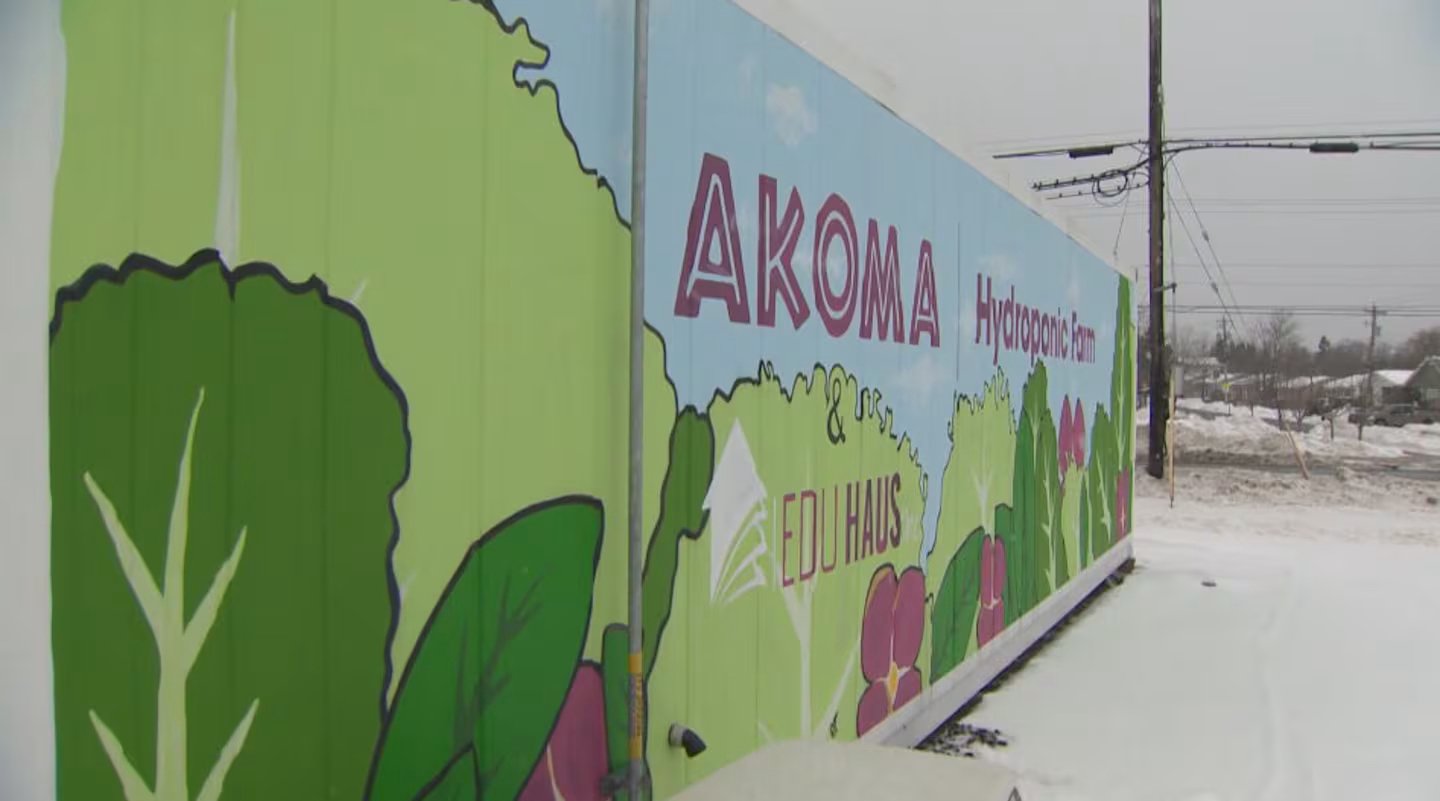
Inside a converted shipping container in Westphal, N.S., the Akoma Hydroponic Garden is growing fresh basil and teaching young people about horticulture.
For African Heritage Month, Akoma Holdings and EduHaus partnered together to teach and employ Black Nova Scotians in hydroponic farming.
“We are growing hydroponic basil and teaching the community about growing herbs hydroponically and sustainable farming,” said Dr. Simone Legendre, founder of EduHaus.
Also called vertical gardening, produce is planted in lines stretching from floor to ceiling and fed water containing nutrients. Once each plant has its fill, the water drips into a trough and is filtered and recycled. The program manager of Akoma Holdings says the container was purchased a few years ago and is located on historic lands in an effort to continuing building the history of gardening and farming in the area. “The current partnership with EduHaus is to continue growing crops on this historic land,” said Dr. Nutifafa Geh. Legendre says participants in the initiative are youth within the Preston, Cherry Brook and Dartmouth communities.
“We are growing a premium basil, which is a restaurant quality, highly aromatic leaf. It is suitable for pesto and restaurant applications,” she said.“
Our ideal clients would include restaurants that use full leaf basil in their presentations. Restaurants that make pesto, small batch pesto makers, as well as folks who use basil micro greens.”
The groups also plan to donate some of the basil to distribution centres.